06 November 2026
How Jamaican Food Celebrates Heritage and Community
Presented by @zaneqlwp396

Jamaican food does far more than fill a plate. It carries memory, marks celebrations, softens grief, and gives people a shared language even when generations disagree on almost everything else. A pot of rice and peas on a Sunday, a pan of bun and cheese at Easter, a roadside jerk pit sending smoke into the late afternoon air, these are not just meals or snacks. They are signals. They tell people where they are, who they belong to, and what values still matter.
What makes Jamaican food especially powerful is the way it turns history into something tangible. The island’s story is layered with Indigenous knowledge, African survival and creativity, European colonial influence, Indian and Chinese migration, and the improvisation that comes from making do without abundance. You can taste all of that in one meal. A plate can hold scotch bonnet heat, pimento smoke, thyme, ginger, coconut, saltfish, yam, green banana, curry, and techniques shaped by several continents. Yet the result is unmistakably Jamaican.
That is one reason Jamaican food has such emotional weight. It does not hide its roots. It embraces them, seasons them, and serves them publicly.
A cuisine built from history, not trends
To understand how Jamaican food celebrates heritage, it helps to look at how the cuisine developed. Jamaica’s culinary identity did not emerge from a neat national plan. It grew under pressure. Enslaved Africans carried agricultural knowledge, cooking methods, and a deep understanding of starches, stews, greens, and seasoning. Colonial trade systems brought salt cod, flour, sugar, and rum into daily life. Later migration from India introduced curries and spice blends that became central to the island’s cooking. Chinese Jamaican cooks and shopkeepers influenced local tastes in ways that are still visible in takeaway counters and home kitchens. The Arawak legacy remains in cassava and other foodways often mentioned less than they deserve.
The result is a cuisine shaped by resilience. Ackee and saltfish, widely regarded as Jamaica’s national dish, says a great deal about that history. Ackee came from West Africa. Saltfish arrived through Atlantic trade networks and became practical because it was preserved and affordable. Put together with onion, tomato, thyme, scallion, and pepper, those ingredients become something far greater than their origin story suggests. The dish is now a point of national pride, but its deeper meaning lies in adaptation. It is heritage translated into daily life.
That pattern appears again and again in Jamaican food. Dishes are often built around what was available, what could be stretched, what could feed many people, and what could still bring pleasure to the table. Mannish water, run down, pepper pot soup, cow foot, stew peas, and brown stew fish all carry traces of that practical intelligence. These foods were never only about scarcity. They were about flavor, dignity, and making sure no part of a resource went to waste if it could nourish a family or a neighborhood.
The Sunday table and the moral force of a shared meal
If you want to see community expressed through Jamaican food, Sunday is a good place to start. Across Jamaica and throughout the diaspora, Sunday dinner often carries a seriousness that weekday meals do not. The food tends to be more abundant, the timing more deliberate, and the expectation more collective. Even relatives who are too busy to visit midweek may make time for Sunday.
The menu varies by household, but the rhythm is familiar. There may be rice and peas cooked with coconut milk, thyme, scallion, and kidney beans or gungo peas, depending on the season and the cook’s preference. There may be roast chicken, curry goat, fried fish, oxtail, or a hearty soup earlier in the day. There are often arguments about who makes the best gravy, whether the rice is too soft, and whether the younger generation appreciates proper seasoning. Those arguments are part of the ritual. They keep standards alive.
In many Jamaican families, Sunday dinner is one of the first places where children absorb unwritten lessons. You learn who must be served first. You learn that the eldest aunt may not use a recipe but still expects the dish to taste exactly right. You learn that food is labor, and labor deserves respect. You learn that certain combinations belong together, and that if someone says the chicken needs more browning, they are not insulting the cook so much as defending a family benchmark.
These meals do community work quietly. They bring people into the same physical space, create a reason to stay longer, and reopen conversations that would otherwise drift away. Families often discuss school, bills, church, travel plans, and health concerns over a meal that took hours to prepare. In that sense, Jamaican food serves as infrastructure. It creates the conditions for family life to continue.
Street food, cookshops, and the public life of flavor
The communal role of Jamaican food does not stop at home. It thrives in public settings where strangers become temporary companions through appetite. A good jerk pan or cookshop can create a small social world within minutes. People compare orders, recommend side dishes, debate which vendor has the stronger pepper sauce, and tell stories while waiting.
Jerk is one of the clearest examples of food operating as cultural theater. Authentic jerk is not simply spicy grilled meat. It relies on a distinctive combination of allspice, thyme, scallion, garlic, ginger, scotch bonnet, and smoke, traditionally from pimento wood. The technique has roots in the methods used by the Maroons, who developed ways of preserving and cooking meat in the hills while resisting British colonial forces. That history matters. Every properly smoked piece of jerk pork or jerk chicken carries a memory of ingenuity and resistance.
At the roadside, that history becomes social experience. Smoke draws people in before they even see the meat. The vendor chops the pork with decisive rhythm. Bread or festival lands on the plate. Someone asks for “a little more gravy,” then reaches for a drink because the pepper was not little at all. These details sound ordinary, but they are the mechanics of belonging. Jamaican food invites participation. It asks people to smell, wait, watch, and respond.
Cookshops perform a similar function on a broader scale. They often serve workers, taxi drivers, office staff, students, and retirees in the same room. Class distinctions do not disappear, but they soften around a shared appreciation for a good lunch. The person in business clothes and the person in work boots may both want curry goat with white rice and steamed cabbage. That kind of overlap matters in any society. Food does not solve inequality, but it creates moments where identity feels shared rather than segmented.
Heritage lives in seasoning, technique, and judgment
People often talk about Jamaican food in terms of signature dishes, but heritage also lives in less obvious places. It lives in the way seasoning is layered, in how long a pot is left to simmer, in whether the escovitch pickle has enough acidity to cut through fried fish. These details are rarely written down with precision. They are taught by observation, correction, and repetition.
Ask a skilled home cook how much thyme goes into a pot and you may not get a direct measurement. You might hear “enough” or “until it smell right.” That can frustrate beginners, but it reflects a real culinary tradition. Jamaican cooking depends heavily on sensory judgment. Taste, aroma, texture, and timing matter as much as formal recipe structure. A cook learns when dumplings are ready by touch, when a curry has cooked out enough by smell, and when plantain has reached the point between caramelized sweetness and collapse by color.
That oral and practical method of teaching is a form of cultural inheritance. Recipes in written form can travel, but judgment travels person to person. It is common for younger cooks to realize, years later, that they were being trained long before they recognized it. Peeling callaloo, shelling peas, washing rice, grinding spices, or being sent to buy scallion from the market are not glamorous tasks. Yet they are how culinary heritage gets passed down without ceremony.
There is also a discipline to Jamaican food that outsiders sometimes miss. The cuisine is famous for bold flavor, but good Jamaican cooking is not simply aggressive seasoning. Balance matters. Scotch bonnet should bring fruit and heat, not blunt force. Browning should add depth, not bitterness. Coconut milk should enrich without turning a dish heavy. Saltfish must be soaked and handled carefully or it overwhelms everything. These trade-offs are where experience shows.
Celebration has a menu, and the menu tells a story
Every culture has foods that become symbolic during major moments, and Jamaica is no exception. At weddings, funerals, Christmas gatherings, church events, and community fundraisers, the menu often does social and emotional work alongside the people hosting it.
Christmas is perhaps the strongest example. Across Jamaica and in Jamaican homes abroad, Christmas often means sorrel, black cake, gungo peas, ham, curried goat, and a house that smells of spice and effort. Sorrel, steeped with ginger and sweetened to taste, can feel festive with almost no explanation needed. Black cake, rich with soaked fruits and deep flavor, is labor-intensive enough to signal that the season deserves extra care. People judge holiday tables partly by generosity and partly by authenticity. Did someone take shortcuts that dulled the flavor, or did they respect the occasion?
Easter brings its own pairing, bun and cheese. The combination is simple, but the attachment is intense. A slice of spiced bun with processed cheddar may sound modest on paper, yet for many Jamaicans it is inseparable from childhood, school holidays, and springtime rituals. That is how heritage often works. It is not always grand. Sometimes it is a specific taste at a specific time of year, repeated so consistently that it becomes emotional architecture.
Funerals reveal another dimension of Jamaican food and community. Food at a nine night or post-funeral gathering is not an accessory. It is part of care. Mourners need practical nourishment, but they also need the reassurance of familiar dishes and collective hospitality. In settings of grief, a hot meal can do what words cannot. It grounds people. It gives the bereaved one less thing to manage. It reminds everyone present that community is measured in action.
Markets, farms, and the local intelligence behind the plate
Jamaican food celebrates heritage partly because it remains tied to land and seasonality in ways that industrialized food cultures often lose. Even when supermarkets shape modern shopping habits, markets still matter. They are places where cooks assess the quality of callaloo, choose the right yams, judge the ripeness of plantain, and talk with vendors who know which parish produced what.
That relationship to ingredients creates a strong sense of place. Breadfruit roasted over open flame tastes different from boiled green banana, even though both may function as starchy companions on the plate. A mango eaten in season, sticky and sun-warm, belongs to a different register of memory than one shipped long distance. The same is true for June plum, otaheite apple, naseberry, and soursop. These are not interchangeable fruit bowl decorations. They carry local familiarity.
For many Jamaicans, especially those who grew up with kitchen gardens or relatives in rural areas, food memory is inseparable from geography. You remember the district where the best yams came from. You remember who had the ackee tree, who sold fresh cane juice, who knew how to pick breadfruit at the right stage. That kind of agricultural intimacy strengthens heritage because it ties cuisine to lived landscapes rather than abstract identity.
It also helps explain why Jamaican food can spark fierce opinions. When people argue over the “right” way to make a dish, they are often defending regional habits, family methods, or ingredient standards rooted in place. Those debates are not trivial. They are evidence that food still matters enough to protect.
The diaspora keeps the table open
Jamaican food has traveled widely, and migration has changed how heritage is maintained. In London, Toronto, New York, Miami, and many other cities, Jamaican restaurants, bakeries, patty shops, and family kitchens act as cultural anchors. For immigrants, food is often one of the fastest ways to re-create home when climate, accent, and routine all feel unfamiliar.
The first generation usually focuses on preservation. They search for familiar ingredients, compare local produce with what they knew back home, and complain, often correctly, that some substitutions are not quite right. Scotch bonnet may be available, but the thyme tastes different. The breadfruit costs too much. The ackee comes canned. The fish is not the same. These compromises matter because authenticity is not a slogan when your palate has decades of memory behind it.
The second and third generations often engage the cuisine differently. For them, Jamaican food may be a bridge to grandparents, a marker of identity at school, or a comfort during holidays. A beef patty in a lunch bag, curry goat at a wedding, or fried dumpling on a Saturday morning can carry enormous emotional significance. Even if younger family members do not cook every dish from scratch, they often remain strongly attached to the food as a sign of who they are.
Diaspora cooking also produces innovation. Some changes are practical. Ingredients differ, time is tighter, and urban kitchens are not built like rural yards. Some changes are creative. Jamaican flavors appear in new formats, from patty fillings that reflect contemporary tastes to vegan versions of traditional dishes. Not every experiment works, and not every elder approves. But adaptation has always been part of Jamaican food. The important question is not whether change exists. It is whether the change respects the cuisine’s core logic of flavor, memory, and communal meaning.
Why certain dishes carry unusual emotional power
There are foods people enjoy, and there are foods people defend. Jamaican food often falls into the second category because so many dishes are linked to personal history. A bowl of cornmeal porridge can remind someone of school mornings and financial struggle in the same breath. Fried dumpling with salt mackerel might bring back a grandparent’s kitchen with startling force. Soup on a Saturday can feel less like a meal than a weekly reset.
This emotional charge comes partly from repetition. Dishes become important because they appear again and again at meaningful moments. It also comes from labor. Jamaican food often asks a lot of the cook. Soaking peas, cleaning meat, grating spices, watching a pot, preparing ground provisions, frying in batches, and seasoning ahead all require time. People know, even if only subconsciously, when effort has been invested on their behalf. That recognition deepens the social value of the meal.
One of the strongest examples is oxtail, which has shifted over time from a relatively economical cut to a prized dish in many places. Its current popularity can obscure the older lesson embedded in it: patient cooking can transform something tough into something luxurious. That idea runs through the cuisine. Time, technique, and seasoning redeem ingredients. Heritage is often built from exactly that kind of wisdom.
Community is reinforced through generosity
Hospitality around Jamaican food tends to be expansive. Guests are encouraged to eat more, carry food home, and taste everything. A host who worries there may not be enough food is not simply managing logistics. They are protecting dignity. Generosity is part of the performance of care.
That generosity extends beyond special occasions. Neighbors share fruit from trees, send over soup, or contribute a dish when someone is ill, overworked, or newly bereaved. Community kitchens at churches and schools rely on trusted recipes because familiar food draws people in and encourages participation. Fundraising events often work because people know the meal will be worth showing up for. The food is the attraction, but it is also the mechanism through which support is mobilized.
There is practical intelligence in this pattern. Shared food is one of the most efficient ways to build and maintain social bonds. It allows pride, affection, and obligation to be expressed concretely. Saying “let me send a plate for you” carries a different force from a generic offer of help. It is immediate. It nourishes. It creates reciprocity.
What Jamaican food teaches about identity
Jamaican food celebrates heritage and community because it treats identity as something lived, not announced. The cuisine does not rely on polished narratives about national character. It shows what people value through repeated acts of cooking, sharing, preserving, and adapting. It honors African roots without freezing them in the past. It absorbs outside influence without losing itself. https://www.google.com/maps?cid=11425353456438405488 It makes room for ceremony, but it also respects the ordinary weekday plate.
That may be its greatest strength. Jamaican food is deeply expressive without being precious. It can be festive, humble, improvised, exacting, nostalgic, and entrepreneurial all at once. It belongs at the roadside, at the family table, in the market, at church, at a funeral, and in a diaspora city where the weather has never once felt like Kingston. Wherever it appears, it tends to create a zone of recognition. People smell it, taste it, and know something larger than appetite is being served.
When a cuisine can do that consistently across generations and borders, it becomes more than food culture. It becomes a living archive. Jamaican food holds the island’s history in public view, then invites people to gather around it. That is heritage at its most generous. That is community made edible.
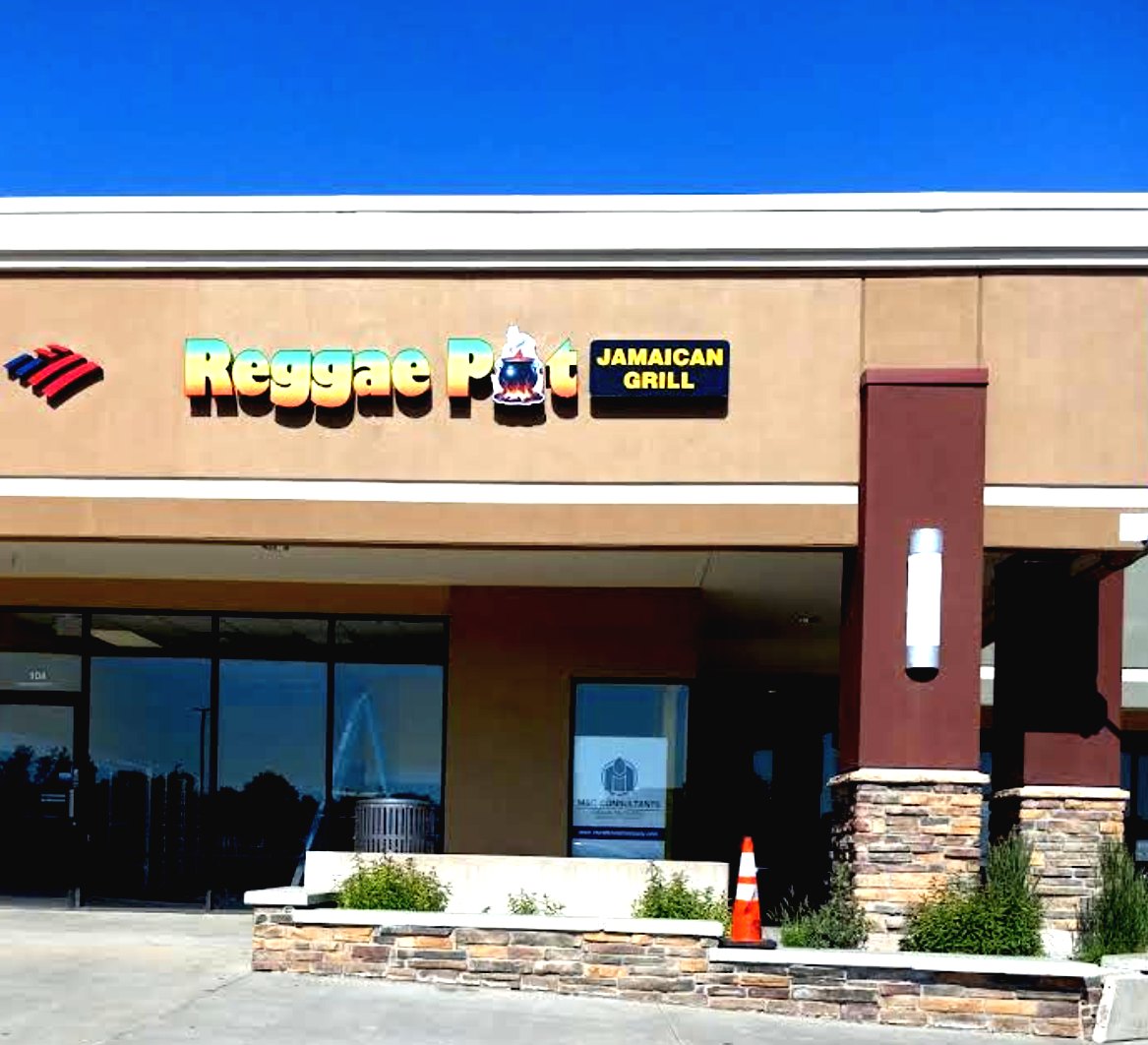
Reggae Pot Jamaican Grill
2243 S Monaco St Pkwy #104
Denver, CO 80222
+1 720-410-2956
FAQ About jamaican food
What is the best Jamaican food to try in Denver?
The best choice depends on your tastes. Popular options include jerk chicken, curry goat, slow-cooked oxtail, and savory patties. Reggae Pot lists these dishes on its menu, with sides such as rice and peas and plantains. Ask the Denver team about current availability and spice levels.
Is Jamaican food very spicy in Denver?
Heat varies by dish and preparation. Jerk seasoning often includes scotch bonnet peppers alongside herbs and allspice, while other dishes may have gentler seasoning. Ask about the heat of the specific dish and any sauce before ordering.
What are some popular Jamaican snacks?
Jamaican patties are a popular snack made with flaky pastry and savory meat or vegetable fillings. Other options include fried dumplings and festival, a sweet fried dough often served with savory dishes. Availability varies, so check the current menu when ordering.